Lucent
A multi-part light installation inspired by the Ramayana,through layered materials, light diffusion, and symbolic forms. The project transforms storytelling into an immersive visual experience using fabric, 3D printing, and handcrafted techniques.
Year:
2023
Category:
Lighting Design
Client:
Academic project
Project Overview
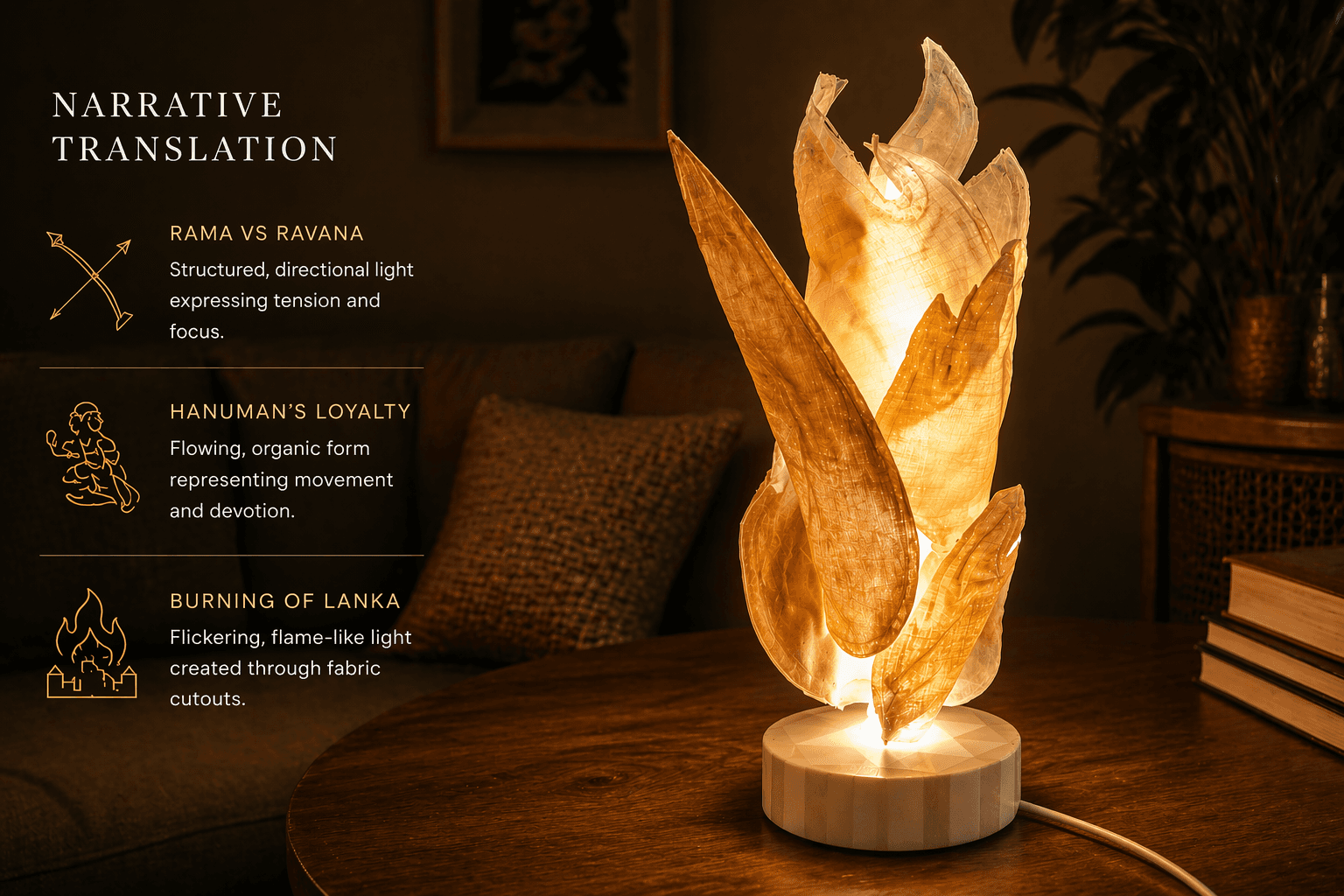
This project is a lighting design prototype inspired by the Ramayana, focusing on translating narrative into a physical and sensory experience. The lamp takes the form of a rising flame, representing energy, movement, and transformation.
The design combines fabric, 3D printed components, and LED lighting to create a layered structure that diffuses light softly. When illuminated, the lamp produces a warm glow with subtle shadows, turning it into an ambient lighting object rather than a direct light source.
The project explores how light, material, and form can work together to express an idea, resulting in a functional yet expressive product.
Software Used
Fusion 360, RD Works, Lightroom
Concept
The project is inspired by the Ramayana and focuses on translating its key moments into form and light. Instead of showing scenes directly, the idea was to capture the feeling of elements like fire, energy, and movement—especially from moments like the burning of Lanka.
The lamp takes the form of a rising flame, using layered fabric to create a sense of upward motion. When lit, the light passes through these layers and creates a warm glow with soft shadows, making the form feel alive.
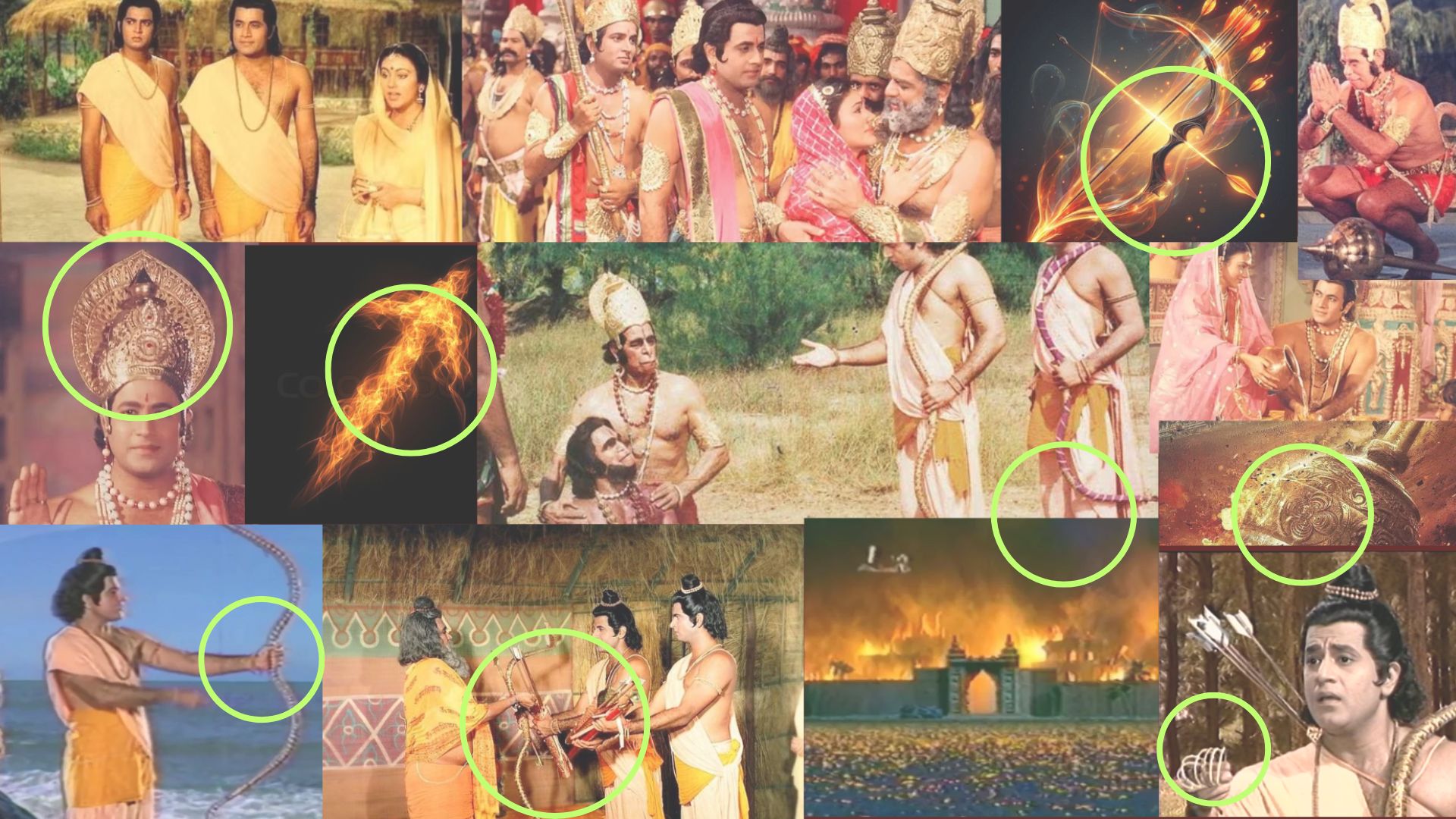
Rather than telling the story literally, the design tries to express it through atmosphere—using light, material, and form to create an experience.
Why this Concept
I chose this concept because wanted to move away from directly showing a story and instead explore how it can be felt through light and form. The Ramayana gave a strong base, especially the idea of fire, energy, and transformation seen in the burning of Lanka.
The flame became a natural direction because it represents movement, intensity, and change, which could be translated clearly into a lighting object. It also allowed me to experiment with layers, translucency, and shadow, which are important when working with light.
This concept helped me connect narrative, material, and function in a simple way, making the design both meaningful and practical as a lamp.
Design Approach
The approach started with the idea of flame and movement, inspired by the Ramayana. Instead of fixing the form from the beginning, I explored different shapes that feel like something rising or flowing.
Target Audience
Primary Audience
Urban design-conscious buyers (25–45 yrs)
People who value aesthetic lighting + storytelling objects in their homesArt & design collectors
Interested in limited, conceptual pieces, not mass décor
Secondary Audience
Cultural enthusiasts (Indian mythology lovers)
People who connect with the Ramayana narrative, but want a modern interpretationInterior designers & architects
Looking for statement lighting installations for homes, studios, boutique spaces
Context of Use
Living rooms (as a focal light object)
Gallery / exhibition spaces
Boutique hotels / cultural spaces
Positioning
This is not:
a religious object
a souvenir
This is:
a contemporary light installation inspired by narrative and emotion
a functional art piece
Process
Moodboard & Sketching
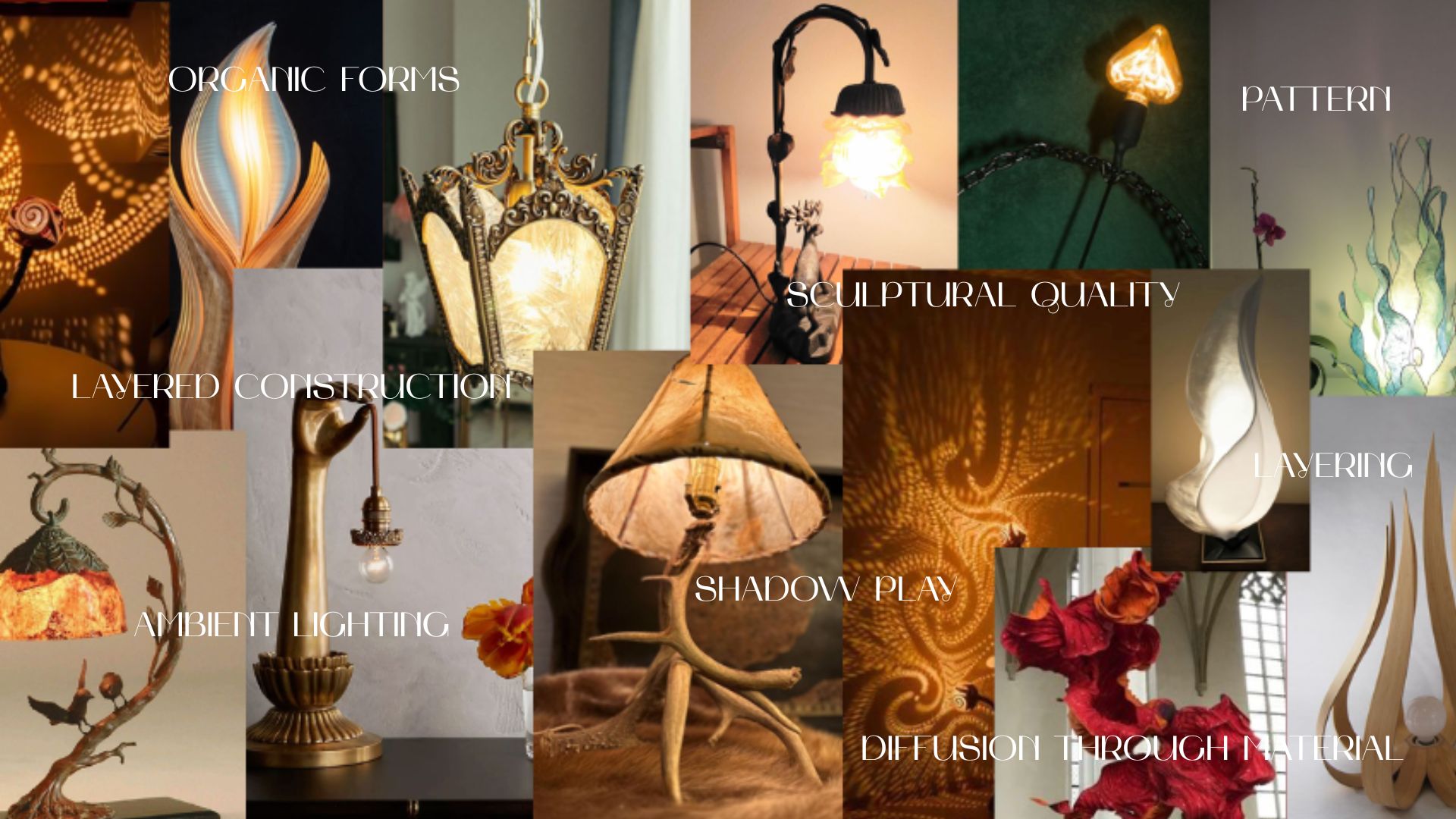
The process started with creating a moodboard based on warm light, flame forms, and organic shapes. References included sculptural lamps, fabric textures, and lighting that creates soft shadows and patterns.
From this, moved to quick sketches, exploring different ways to represent a flame-like form.
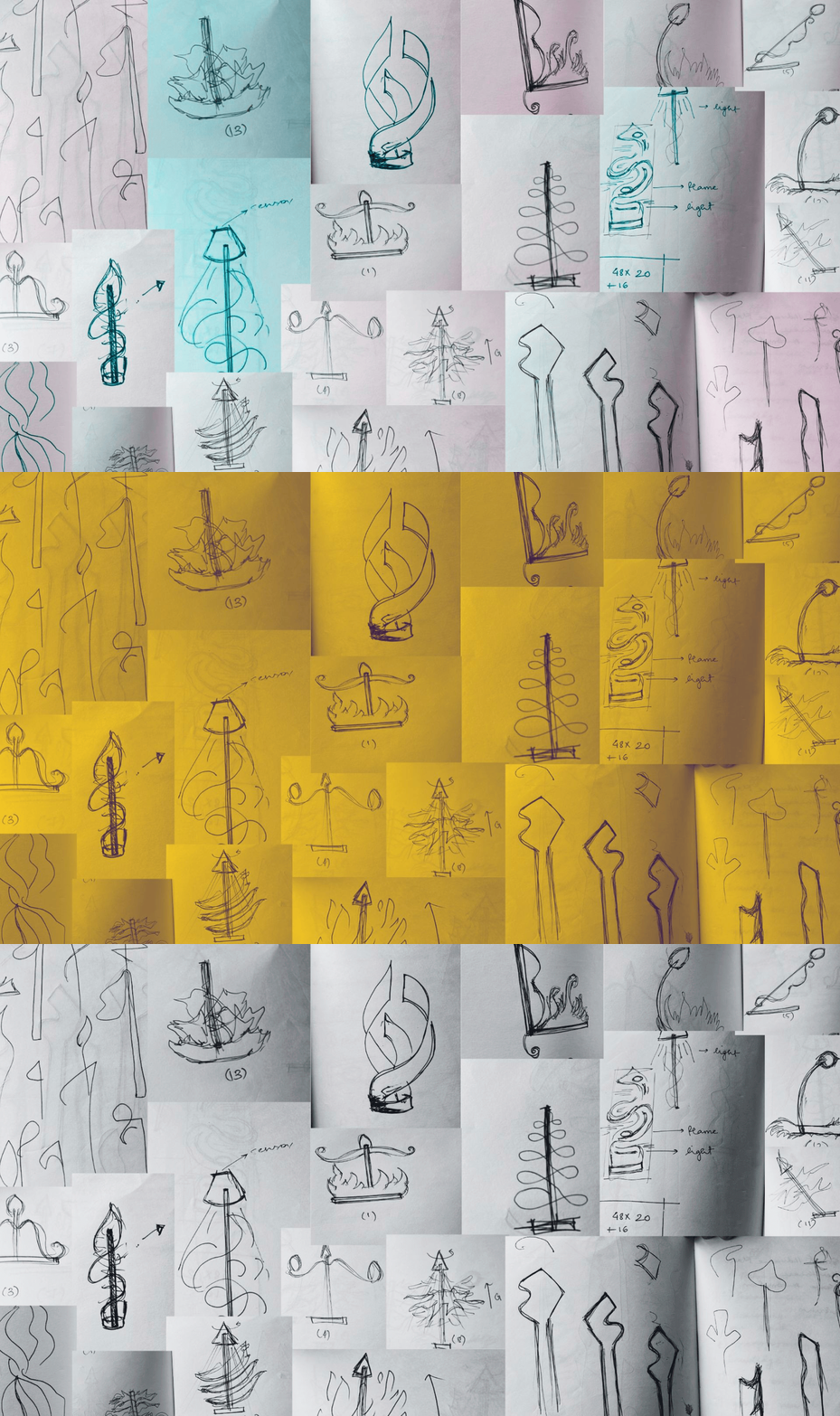
The focus was on flow, direction, and layering, rather than exact shapes. These sketches helped in understanding how the form can rise and wrap around the light source.
This stage was mainly about visual exploration, helping to define the overall direction before moving into prototyping.
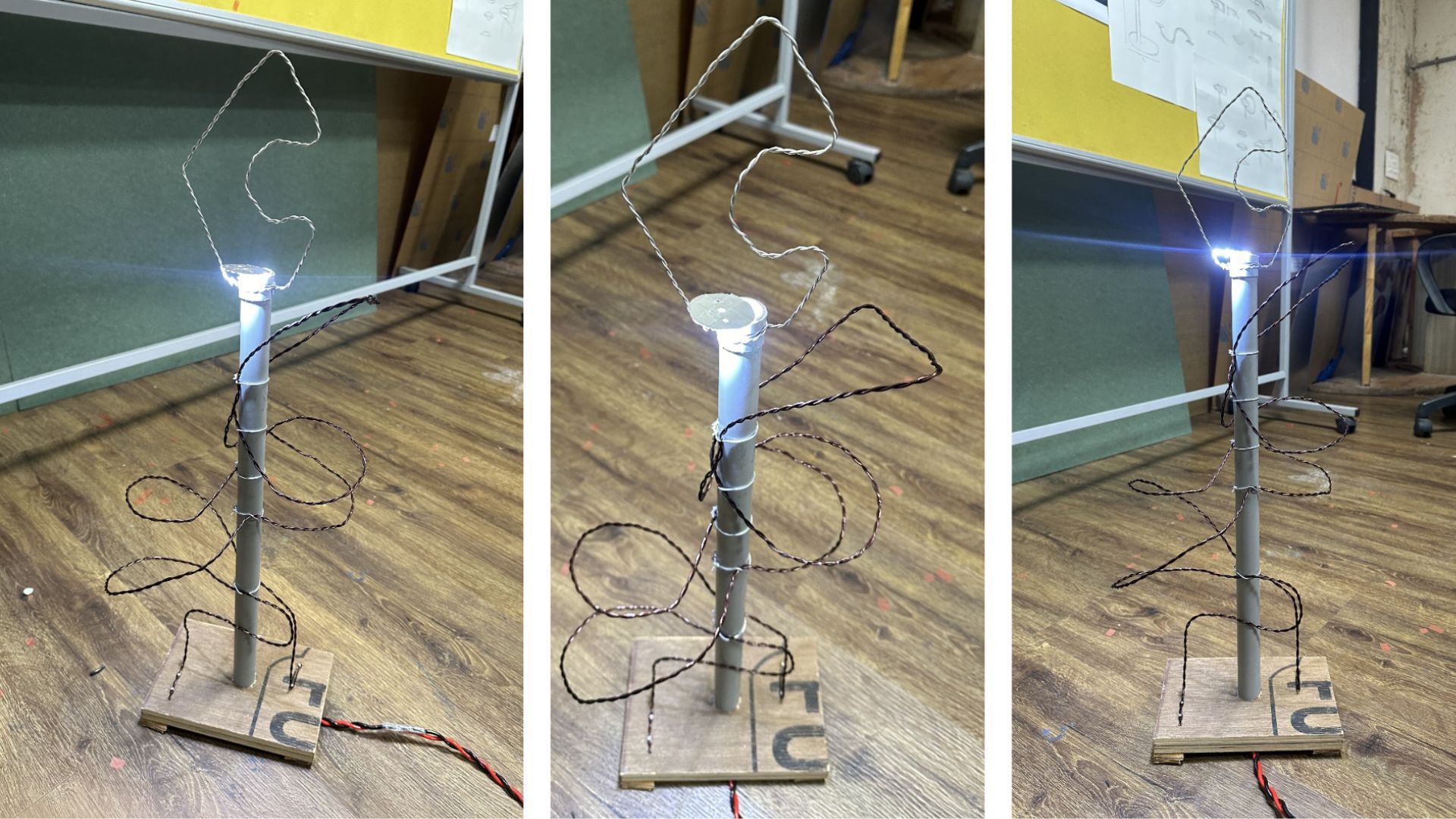
Initial Prototype
Materials: Wire, PVC, wood
Purpose: Test structure and composition
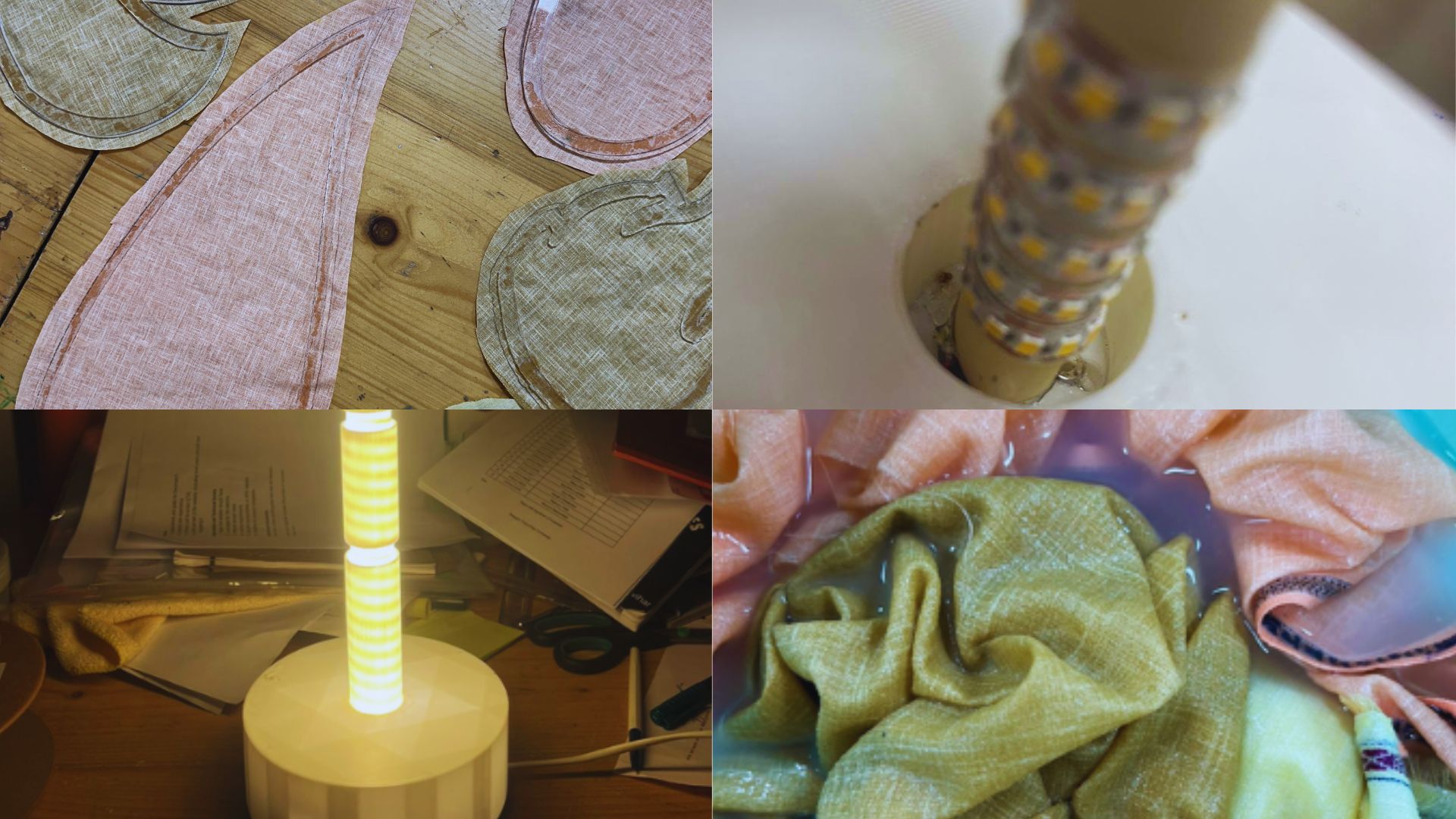
Started testing materials, especially fabric—trying to make it stiff enough to hold shape but still let light pass through
Material Development
Fabric treated with cornstarch + water + Fevicol for stiffness
Acrylic sheets heat-bent for controlled shapes
PLA 3D printing used for connectors and structural elements

The design developed by adding layers one by one, checking how light behaves through each layer. A lot of trial and error was involved in adjusting thickness, spacing, and cut-outs to get the right glow and shadow.
Integration
LED strip embedded inside
3D printed pipe acts as light diffuser core
Fabric cut-outs create flame-like light patterns
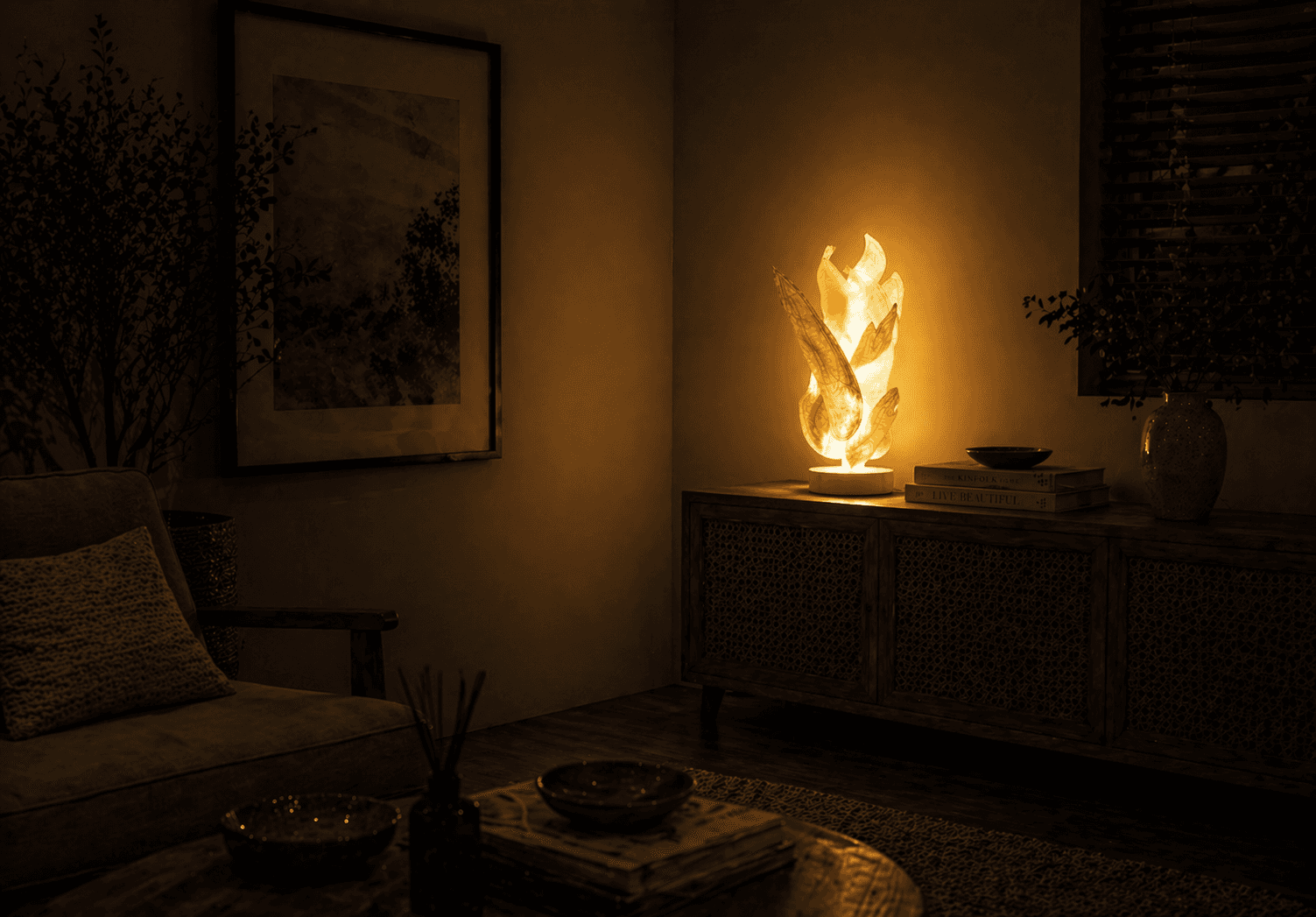
It also works as a decor piece. Even when switched off, the sculptural form stands out, making it suitable for living rooms, bedrooms, or studios where people want something unique.
For some users, the connection to the Ramayana adds emotional or cultural value, making the product more meaningful.
Overall, it appeals to people who are looking for:
Ambient lighting rather than harsh brightness
Aesthetic, statement objects
Products with story and concept behind them
Features
Adjustable light diffusion through fabric layers
Flame-inspired cut-out patterns
Hybrid fabrication (handmade + digital)
Projects
other